
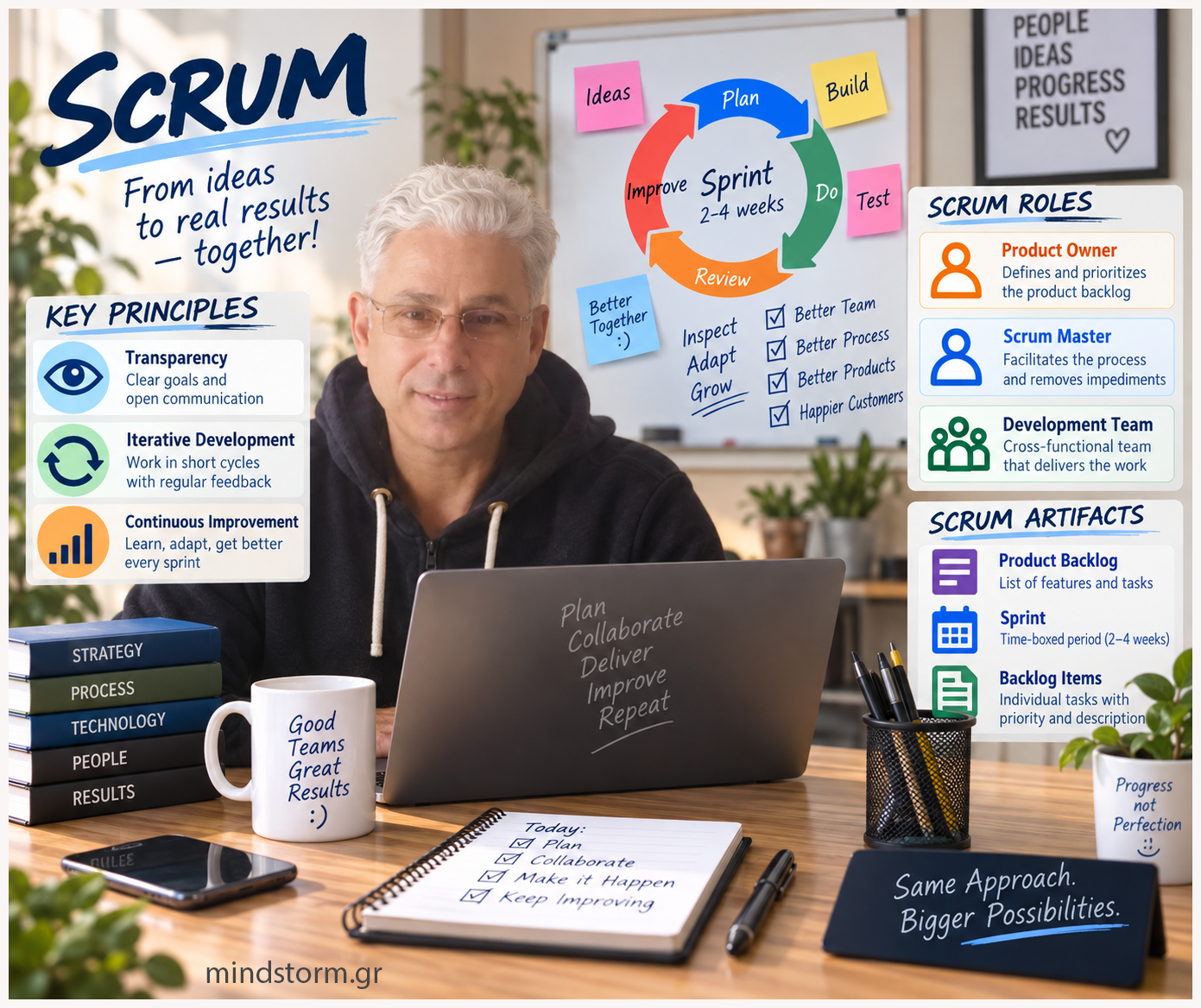
SCRUM is a popular framework used for managing and completing complex projects, especially in software development, but also in other areas such as marketing, sales, and product management.
Key Principles:
- Transparency: Clear and concise definition of project goals and objectives
- Iterative Development: Work is divided into iterations, allowing for regular feedback and adaptation
- Continuous Improvement: Focus on learning and improvement at every stage of the project
SCRUM Roles:
- Product Owner: Responsible for defining and prioritizing the product backlog (a list of features and tasks to be completed)
- Scrum Master: Facilitates the Scrum process, ensures the team is following Scrum principles, and removes impediments to progress
- Development Team: Cross-functional team that develops the product, working closely with the Product Owner and Scrum Master
SCRUM Artifacts:
- Sprint: A time-boxed period of work, usually 2-4 weeks, where a specific set of tasks is completed
- Product Backlog: A list of features and tasks to be completed
- Backlog Items: Individual items in the product backlog, each with its own description and priority
SCRUM is an adaptive and iterative approach to project management, emphasizing teamwork, communication, and continuous improvement.
Note: Scrum is often used in software development, but its principles and practices can be applied to any complex project that requires iterative and incremental progress.
Here’s an example of how Scrum might be applied in a real-world scenario:
Company: ABC Marketing Agency
Project: Launch a new marketing campaign for a product
Project Goals:
| Sprint | Duration | Objectives |
| Sprint 1 | 2 weeks | Conduct market research, create campaign plan |
| Sprint 2 | 2 weeks | Develop campaign materials (ads, social media content, etc.) |
| Sprint 3 | 2 weeks | Launch campaign, measure results |
Product Backlog:
| Backlog Item | Description | Priority |
| Research Market | Conduct market research to understand target audience | High |
| Create Campaign Plan | Develop a comprehensive campaign plan | High |
| Develop Ad Materials | Create campaign ads, social media content, etc. | Medium |
| Launch Campaign | Launch campaign, measure results | High |
Backlog Item Status:
| Backlog Item | Status | Reason for Delay |
| Research Market | Done | Completed on time |
| Create Campaign Plan | In progress | Delayed due to team availability |
| Develop Ad Materials | Not started | Waiting on client feedback |
| Launch Campaign | Not started | Waiting on ad materials completion |
Scrum Roles:
| Role | Name | Responsibilities |
| Product Owner | Jane | Defines and prioritizes product backlog |
| Scrum Master | Bob | Facilitates Scrum process, removes impediments |
| Development Team | Alex, Mike, Sarah | Develops product backlog items |
In this example:
- The project is divided into three sprints, each with specific objectives and duration.
- The product backlog is a list of tasks and features to be completed, with priorities indicating the order of importance.
- The development team is working on specific tasks, with the Scrum Master (Bob) facilitating the process and ensuring the team is following Scrum principles.
- The Product Owner (Jane) is responsible for defining and prioritizing the product backlog, and ensures that the team is working on the right tasks.
- The team is using Scrum to adapt to changing circumstances and deliver the project in an iterative and incremental manner.
This is just a simple example, but it illustrates how Scrum might be applied in a real-world scenario to manage and deliver complex projects.





Comments are closed.